

41st & Central: The Untold Story of the L.A. Black Panthers is a documentary directed by Gregory Everett. The film examines the history of the Black Panther Party in Los Angeles and Southern California.
The documentary preserves an important part of Los Angeles history. It uses interviews with former Black Panther Party members and archival material. These sources help tell the story through people connected to the period.
The film explores the formation of the Los Angeles chapter. It also introduces people involved in the movement. Several major events that shaped its history and legacy are discussed.
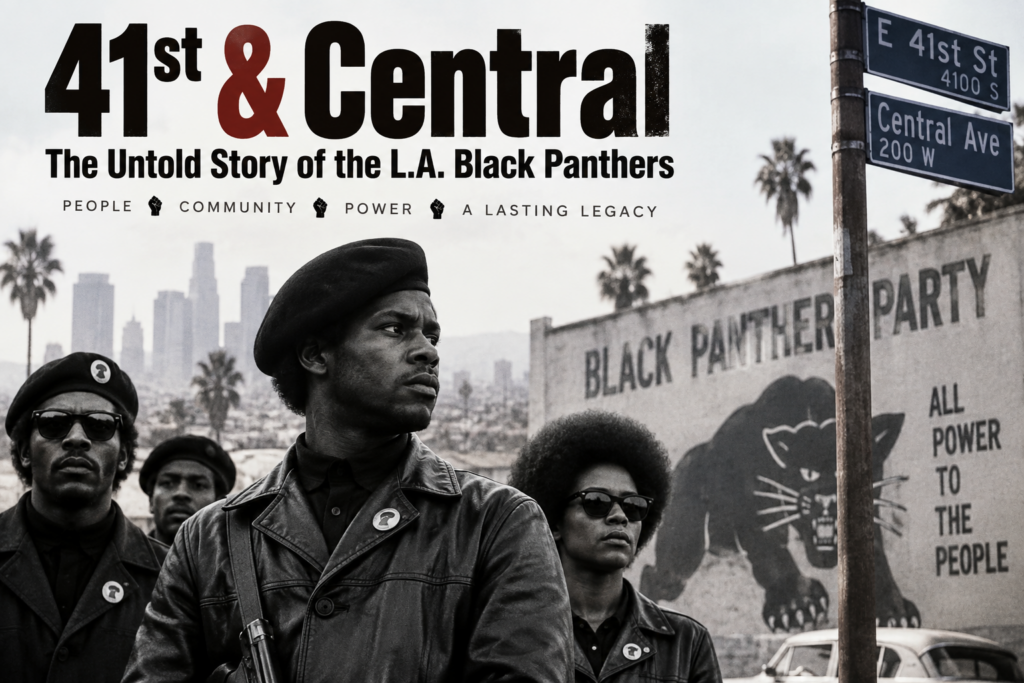
The Story Behind 41st & Central
The history documented in 41st & Central is closely connected to Los Angeles in the late 1960s. It was a period of major social and political change.
The film examines the development of the Southern California chapter of the Black Panther Party. It presents first-hand perspectives from people connected to that history.
The documentary also considers the experiences of Black communities in Los Angeles. It examines conflicts involving the organization and events surrounding members of the local chapter.
The story is not presented only through later interpretations. Interviews allow people who experienced the period to describe events from their own perspectives.
Gregory Everett and the Documentary
Gregory Everett was a Los Angeles filmmaker. He directed 41st & Central and focused the documentary on an important chapter of local African American history.
Everett also had a personal connection to the subject. His father, Jeffrey Everett, had been a member of the Black Panther Party.
The documentary combines interviews with historical accounts and archival footage. Together, these materials preserve perspectives connected with the Los Angeles chapter.
This approach gives viewers several ways to understand the history. Personal testimony appears alongside historical material from the period.
The Los Angeles Black Panthers
The Los Angeles chapter developed within a distinctive local environment. Racial inequality, community activism, policing, and political movements all shaped this period.
41st & Central examines people and events connected with this history. It includes experiences associated with members of the Southern California chapter.
The documentary also provides broader historical context. This helps explain the circumstances surrounding the organization in Los Angeles.
Black Panther Party chapters did not develop in exactly the same way in every American city. Local conditions influenced their activities and experiences.
For that reason, the Los Angeles chapter has its own place within the wider history of the movement. Preserving local accounts helps document those differences.
Interviews and Archival Material
Interviews play an important role in 41st & Central. They provide personal accounts from people connected to the history being examined.
Archival material adds another layer of context. It helps connect personal memories with the historical period shown in the documentary.
Together, these sources create a record of experiences that might otherwise receive less attention. They also provide material for viewers interested in Los Angeles history.
The combination of testimony and archival footage gives the documentary a strong historical focus. It allows individual experiences to remain part of the larger story.
Screenings and Historical Recognition
41st & Central has appeared at film festivals and cultural programs. It has also been shown in educational and community settings.
The documentary received the Audience Favorite Documentary award at the 2010 Pan African Film Festival.
Screenings helped introduce the history documented in the film to new audiences. Educational presentations also provided opportunities for further discussion.
The continued interest in the documentary reflects the value of preserving first-hand historical accounts. These accounts contribute to the record of the Los Angeles Black Panther Party.
Why the History of 41st & Central Matters
Historical documentaries can preserve voices that might otherwise disappear from public memory. Interviews are especially valuable when participants can describe events they experienced themselves.
41st & Central contributes to that historical record. Its focus on Los Angeles provides a local perspective within a much larger American story.
The documentary can also serve as a starting point for further research. Viewers can compare personal testimony with other historical records and archival sources.
This approach encourages a broader understanding of the period. It also demonstrates why local history remains important.
About the 41st & Central Archive
41Central.com has historical associations with the documentary 41st & Central: The Untold Story of the L.A. Black Panthers.
The website is now independently operated. It is not presented as the official website of Gregory Everett or his estate. It is also not presented as an official website of the filmmakers or the Black Panther Party.
This page preserves publicly documented historical context surrounding 41st & Central. It also distinguishes the current website from the site’s previous operation.
The goal is to provide useful historical information without suggesting an official relationship with the documentary’s original creators.
For additional historical context, readers can explore the work of Gregory Everett and his role in documenting this period of Los Angeles history.
This distinction also helps place the documentary within the broader history and legacy of South Central Los Angeles.